Posts

Fishing Access Areas Not Safe for Swimming
Image
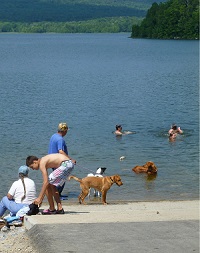
MONTPELIER, Vt. – The Vermont Fish & Wildlife Department reminds the public not to swim at fishing access areas due to safety concerns.  The primary use of the fishing access areas is for launching and retrieving motorboats.  The Vermont Fish & Wildlife Department maintains 190 developed fishing access areas on lakes and rivers throughout the state.  These areas have allowed uses determined by law, and swimming is not one of them.  The access areas were purchased and are maintained with funds derived from the sale of fishing licenses and motorboat registrations, as well as a federal excise tax on fishing equipment, fishing tackle, and gasoline for motorboats.  These funding sources explicitly prohibit activities that are in conflict with fishing and boating. Fish & Wildlife regulations prohibit certain uses of fishing access areas including, but not limited to -- swimming, littering, camping, picnicking, making a fire, parking of vehicl...

VT Fish & Wildlife Partners with VT State Parks to Offer Free Let’s Go Fishing Clinics

Image
MONTPELIER, Vt. – Three state parks are working with the Vermont Fish & Wildlife Department to offer free Let’s Go Fishing clinics on a weekly basis this summer. Lake Bomoseen, Lake St. Catherine, and Boulder Beach State Parks will be offering these free clinics. The Let’s Go Fishing program is a network of trained volunteer instructors administered by the Vermont Fish & Wildlife Department who educate Vermonters and visitors of all ages and abilities about angling.  Instructors teach fishing skills and techniques, the importance of quality aquatic habitat, fishing ethics, and fishing regulations.  Clinics are free after paid admission to the state park and all equipment is provided on site. “Fishing is a fun group activity, and these guided weekly clinics make the learning process simple and enjoyable.  We’ve had entire families come and learn together,” said Corey Hart, Education Specialist with Vermont Fish & Wildlife. Vermont’s rural land...

Barnet Man Sentenced in Deer Poaching Incident

Image
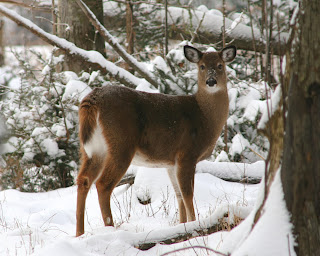
Previously Convicted of Two Dozen Fish and Wildlife Crimes DANVILLE, Vt. – A Barnet man has been sentenced to two years in prison with all but 30 days suspended and ordered to pay $850 in fines after pleading no contest to five charges stemming from an October 2017 incident. Carl Sanborn, 49, pled no contest to five charges, including taking big game by illegal means, hunting while under revocation, shooting from a roadway, failure to stop for a game warden, and contributing to juvenile delinquency.  Sanborn has previously been convicted of 24 fish and wildlife crimes dating back to 1993 and had been sentenced to 81 days and fined $6,800 because of these previous convictions. Sanborn was convicted of taking part in the shooting of a deer decoy on the night of Saturday, October 21.  The decoy was placed by Vermont State Game Wardens in an area in Danville with a long history of poaching activity. Sanborn’s son, Jonathan, 21, was also charged in the incident with si...

Printed Muzzleloader Antlerless Deer Permit Applications Available

Image
MONTPELIER, Vt. -- Vermont’s muzzleloader season antlerless deer hunting permit applications are on Vermont Fish & Wildlife’s website ( www.vtfishandwildlife.com ), and now printed applications are also available from license agents statewide.  Hunters applying online for an antlerless permit will do so through the online license sales system as if they were purchasing a license or a tag using their conservation ID number.  Landowners who do not have a Conservation ID number will need to create a profile through the online license sales system to apply for a landowner application even if they do not intend to purchase a hunting license. The December 1-9 muzzleloader season has 27,000 antlerless permits distributed in 18 of Vermont’s 21 Wildlife management Units (WMU), which is estimated to result in 3,914 antlerless deer being taken.   Landowners who post their land may not apply for a landowner priority muzzleloader antlerless deer permit.  They are e...

One Hundred Hunters Fail to Meet Vermont’s New Bear Tooth Rule Requirements

Image
MONTPELIER, Vt – A new rule passed in 2017 by the Vermont Fish and Wildlife Board requires hunters to collect and submit a pre-molar bear tooth within 48 hours of shooting a bear. The submission must be to a game warden or other department official. The mandatory collection, created with the advice of Vermont Fish & Wildlife Department, was intended to increase compliance and improve data collection on this important species. Failure to do so is a civil violation, meaning it carries no criminal penalty, nor does it result in points being assessed against hunters’ licenses. Repeated failures can result in a fine of $105.00. This year, 100 hunters failed to meet the new requirements. Among those who did not submit a bear tooth on time was Col. Jason Batchelder, the head of Vermont’s Game Wardens. Although Batchelder found the tooth and eventually submitted it, he did so well after the deadline. “Improving data collection was our aim. We wrote the rule this way because, whil...

Give Nesting Loons Space

Image
MONTPELIER, Vt. – The Vermont Fish & Wildlife Department is asking boaters and anglers to give loons a hand this summer by enjoying them from a safe distance.  Loons were removed from Vermont’s endangered species list in 2005 following decades of recovery effort.  But one of the main threats still facing loons as they continue to recover is human disturbance during the breeding season. “Most areas where loons are nesting on Vermont’s lakes are surrounded by signs reminding people to give loons the space they need, but not all nesting areas are marked,” said John Buck, a wildlife biologist with the Vermont Fish & Wildlife Department.  “We’re asking people to enjoy loons from a distance using binoculars, whether they are in a motor boat, canoe, or a kayak.”  Buck also reminds people to avoid lead fishing tackle.  Loons sometimes swallow stray fishing tackle and suffer the effects of lead poisoning. Lead sinkers weighing one-half ounce or less ...

Electric Fencing Offers Protection Against Chicken Predation

Image
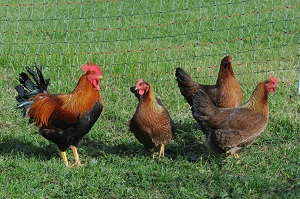
SPRINGFIELD, Vt. – Keeping a small flock of chickens at home to provide eggs and meat has become increasingly popular, but many first-time small-scale poultry farmers are discovering that several species of wildlife like the taste of chicken as much as we do.  The Vermont Fish & Wildlife Department urges poultry owners to use electric fencing and follow other precautions to protect their birds from predation . “We have had a dramatic increase in the number of complaints of bears, foxes, raccoons, fisher, coyotes, skunks, and bobcats preying on chickens,” said Colonel Jason Batchelder, Vermont’s chief game warden.  “Many of the calls are coming from people who are new at keeping chickens and who do not provide sufficient protection for their birds.” “Electric net fencing, secure housing and a few other measures can help protect back yard chickens from most wildlife predation,” he added.  Protecting free-ranging chickens is impossible, so Batchelder ur...