Posts

Consider Delayed Mowing to Conserve Grassland Birds

Image
MONTPELIER, Vt. – Summer in Vermont is greatly enriched by the state’s many grassland birds, from bobolinks flushing up from a grassy field to the beautiful song of an eastern meadowlark.  But many of these species are in decline due to the loss of appropriate grassland habitat.  The Vermont Fish & Wildlife Department and Audubon Vermont are encouraging landowners to help promote these beloved species and give these birds a chance to complete their nesting season simply by altering the times of year that they mow large fields. Bobolinks build nests from May through July among the grasses and wildflowers of fields and meadows.  When bobolinks are present, other grassland bird species such as savannah sparrows and vesper sparrows may also be nesting among the grasses.  Deer fawns, wild turkey chicks, and other animals take refuge in the grass, and are also at risk by mowing too early.  “People maintain large fields and meadows in Vermont for a var...

Come Learn about Vermont’s Wildlife in a Changing Climate on June 14 in Georgia, VT

Image
GEORGIA, Vt. – Vermonters of all ages are invited to attend a presentation about Vermont’s wildlife in a changing climate on Thursday, June 14, at 6:30 p.m.  The presentation will be given at the Georgia Public Library, 1697 Ethan Allen Highway, Georgia, Vermont 05454. Tom Rogers will be presenting at the event.  Rogers is a biologist who has worked on a variety of conservation projects, researching zebras in Kenya, golden-winged warblers in New York, sage grouse and bald eagles in Wyoming, and grizzly bears in Montana.  Tom currently works in outreach for the Vermont Fish & Wildlife Department, connecting the public with fish and wildlife through writing, speaking, and photography.  Through colorful photos and captivating stories, the audience will come away with a new understanding of how climate change is affecting wildlife.  Rogers will talk about what people can do to help conserve biodiversity in Vermont in the face of these new threats. “...

Fawns are Arriving; Leave them Alone Urges F&W

Image
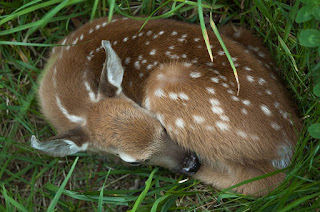
MONTPELIER, Vt. – The Vermont Fish &Wildlife Department says deer fawns are being born this time of year and asks that people avoid disturbing or picking them up.  Most deer fawns are born in late May and the first and second weeks of June, according to Vermont deer biologist Nick Fortin.  Fortin says it is best to keep your distance because the fawn’s mother is almost always nearby.  When people see a small fawn alone, they often mistakenly assume it is helpless, lost or needing to be rescued.  Fawns do not attempt to evade predators during their first few weeks, instead relying on camouflage and stillness to remain undetected.  During these times, fawns learn critical survival skills from their mothers.  Bringing a fawn into a human environment results in separation from its mother, and it usually results in a sad ending for the animal. Fortin encourages people to resist the urge to assist wildlife in ways that may be harmful, and he o...

Muzzleloader Antlerless Deer Permit Applications Available

Image
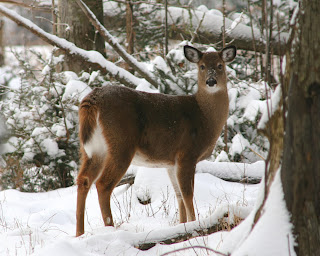
MONTPELIER, Vt. -- Vermont’s muzzleloader season antlerless deer hunting permit applications are now available on Vermont Fish & Wildlife’s website ( www.vtfishandwildlife.com ).  A link to the information and online applications is on the home page.  The Fish and Wildlife Board met on May 23 and set antlerless deer hunting permit numbers and procedures for the fall deer hunting seasons.  Hunting for antlerless deer will be statewide for the October 6 -November 2 and December 1-9 archery season.  Last year, hunters took 2,649 antlerless deer during the archery season.  One deer of either sex would be allowed for youths during the November 3-4 youth weekend hunt.  Youths took 866 antlerless deer during the 2017 youth weekend hunt. The December 1-9 muzzleloader season would have 27,000 antlerless permits distributed in 18 of Vermont’s 21 WMUs, which is estimated to result in 3,914 antlerless deer being taken.  Landowners who post ...

Michael Scott is Vermont’s Warden of the Year

Image
MONTPELIER, Vt. – Michael Scott of Barton is Vermont's State Game Warden of the Year.  A game warden since 2014, Scott received the award in recognition of his excellent service from Governor Phil Scott on May 23 in Montpelier. "I want to thank Michael for his outstanding performance in protecting Vermont's fish and wildlife resources and serving the people of Vermont," said Governor Scott.  He added that Warden Scott was chosen for “his professionalism, his strong work ethic and because he is highly liked and respected by the people who live in his area, including the teachers and students in local schools he has visited.” “Warden Scott effectively enforces hunting, fishing and trapping laws,” said Fish & Wildlife Commissioner Louis Porter, “and in 2017 he arrested the offender in the notorious ‘moose dragging’ case in which a violator shot and killed a lactating cow moose, likely orphaning her calf, and dragging the carcass 12 miles behind his truck --...

Bobcat Caught on Game Camera in Brandon VT

Image
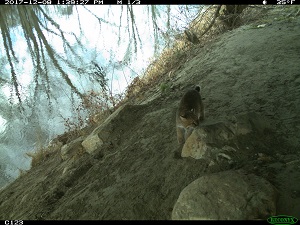
  BRANDON, Vt. – This bobcat was caught in a series of photos on a game camera set up under a bridge in Brandon, Vermont.  The cameras are put out as part of a collaborative partnership between Vermont Fish & Wildlife, The Nature Conservancy, and VTrans to better understand wildlife movement around road crossing structures. “This bobcat passing under the road highlights the fact that wildlife are always on the move,” said John Austin, Vermont Fish & Wildlife’s lands and habitat program manager.  “They need to travel across the landscape to find food or water, to search for mates, or to find places to den or raise their young. Maintaining healthy and connected habitats is one of the most important things we can do to help wildlife continue to thrive in Vermont.” Information learned through this collaborative partnership has allowed VTrans to modify the design of bridges, culverts, and overpasses to permit improved movement of fish and wildlife, while al...

Cliff Tops and Overlooks Closed to Protect Nesting Peregrines

Image
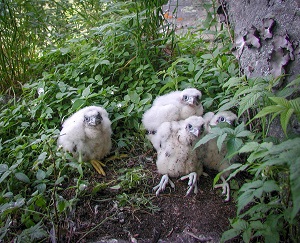
MONTPELIER, Vt. -- Hiking Vermont’s hillsides is a great way to enjoy a spring day, but the Vermont Fish & Wildlife Department and Audubon Vermont recommend checking to see if the area you’re planning to hike or climb is open.  Several cliff areas are currently closed to protect nesting peregrine falcons. “Peregrine nesting is well underway this spring,” said John Buck, Vermont Fish & Wildlife Department biologist.  “The falcons are very sensitive to human presence so we ask climbers and hikers to please avoid the nest sites with a respectful distance.  The closures help people to choose an alternative route in advance.” Barnet Roadcut (Barnet) – Rte 5 pullout closed Bolton Notch (Bolton) – Upper Upper West cliff closed to climbing Bone Mountain (Bolton) – portions of cliff closed to climbing Deer Leap (Bristol) – closed Eagle Ledge (Vershire) – cliff access closed Fairlee Palisades (Fairlee) – cliff top closed Hazens Notch (Lowell) ...